


Renters Have Enough to Do. Stop Giving Them Homework.
Moving day already comes with a ridiculous number of small decisions. Which box has the coffee? Where can the truck park? Who has the Wi-Fi password?
Then comes the email from the property manager. Another account to create. Another service to sort out. Another charge to understand.
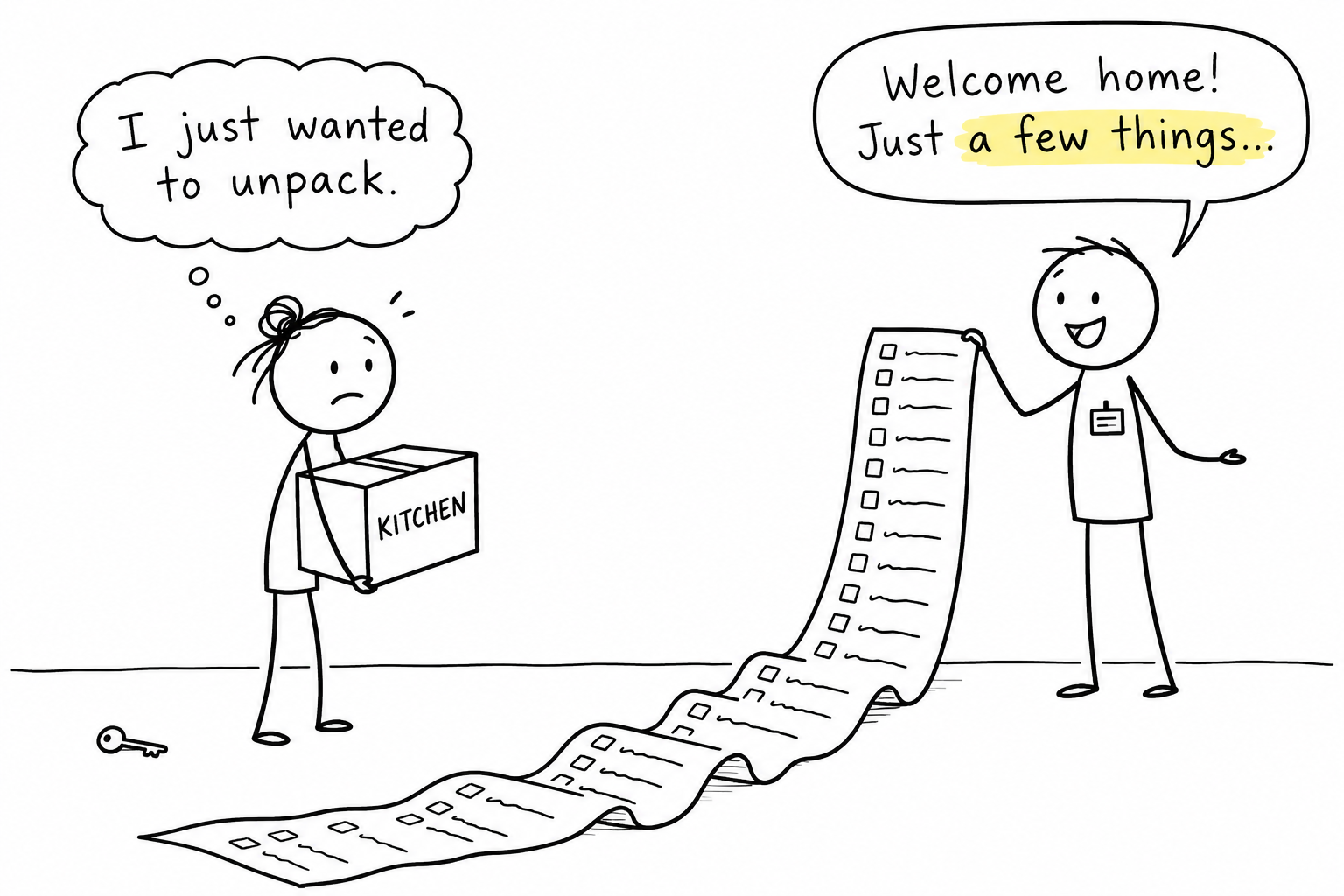
That pile of little tasks is what came to mind while reading AppFolio’s 2026 Renter Preferences Report, based on a survey of 3,002 U.S. renters. Three findings deserve a closer look, especially if you’re deciding what to improve before spending money on another amenity.
An air filter is a surprisingly good place to start
Here’s an easy finding to overlook: 59% of residents with filter delivery included in their lease said they changed their air filters every three months, compared with 30% of nonusers.
An air filter won’t make a glamorous apartment tour. But think about the steps involved in replacing one: remember the task, find the right size, buy it, bring it home, install it.
Delivery removes several of those steps. My reading is that this offers a useful way to evaluate any resident service: how much effort does it actually take off someone’s plate?
Try that question on your move-in instructions. Can a resident find the parking rules without searching an inbox? Does the utility checklist explain exactly what to do? Can someone report a broken appliance without digging up a model number your team already has?
A practical experiment: ask a colleague unfamiliar with your process to complete your move-in checklist. Every time they stop to ask a question, write it down. Those pauses are your next editing assignment.
Willingness to pay isn’t a blank check
Two numbers belong together: 79% of respondents were willing to pay for additional services integrated into their lease, while 95% considered a transparent lease-signing experience essential.
I’d be careful about treating the first number as permission to add a monthly fee. It doesn’t tell you what your particular residents would pay for your particular package.
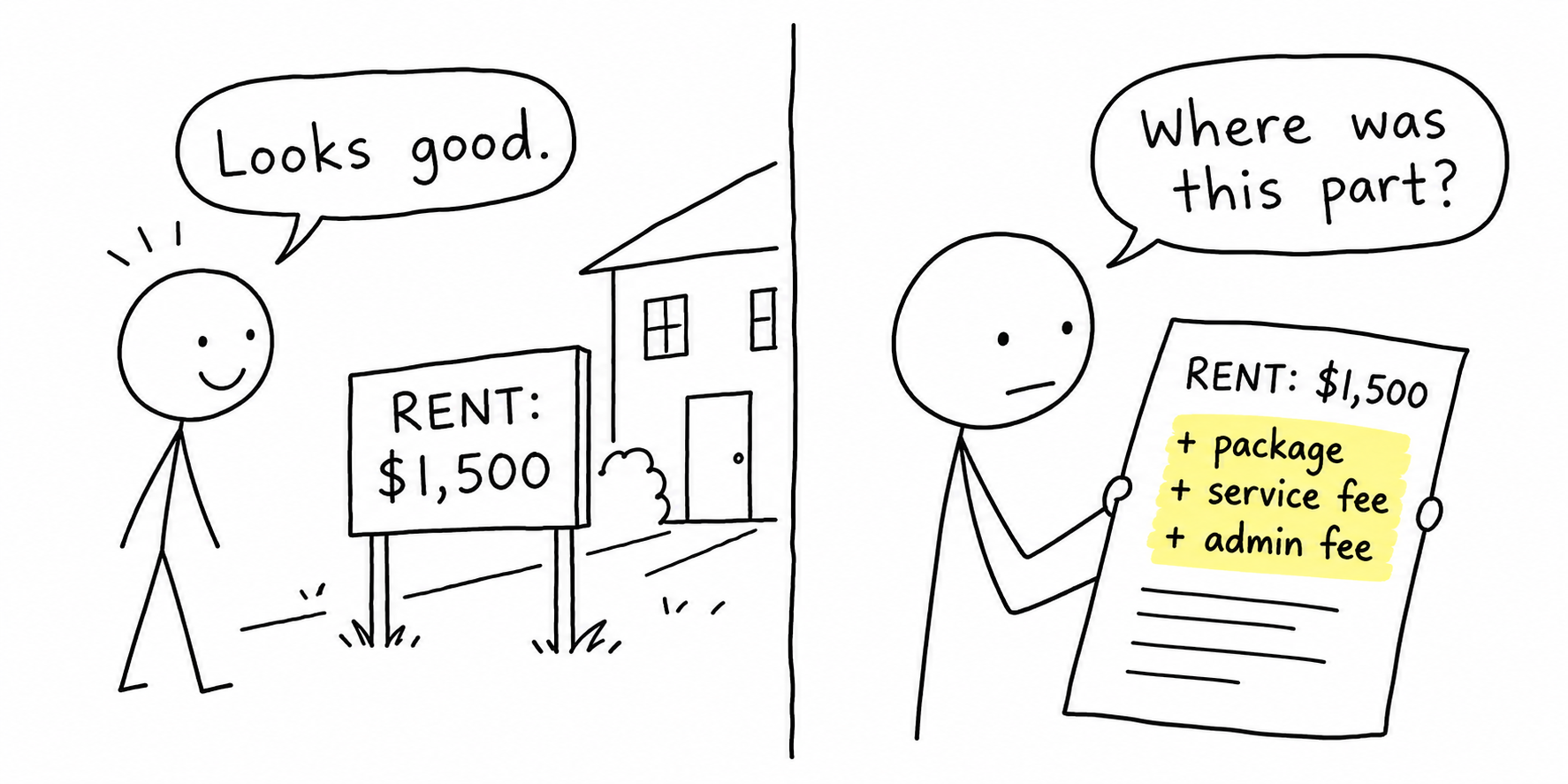
Imagine two versions of the same offer. In one, the renter sees the full monthly cost before scheduling a tour. In the other, a required package appears after they’ve applied and started planning the move.
The service hasn’t changed. The experience of buying it has.
Before introducing a package, put its explanation on one page: what’s included, what it costs, what’s required, and what’s optional. Then ask someone outside the company to explain it back to you. If they can’t, the description needs work.
I’d also measure complaints and cancellations alongside enrollment. Enrollment alone tells you very little when a purchase is required.
The useful AI metric is whether the question got answered
Communication satisfaction was 86% among residents who interacted with an AI concierge, versus 77% among those without access to automated assistance.
That’s an association, not proof that AI caused the difference. AppFolio sells property management software, and its survey should inform a decision rather than settle it.
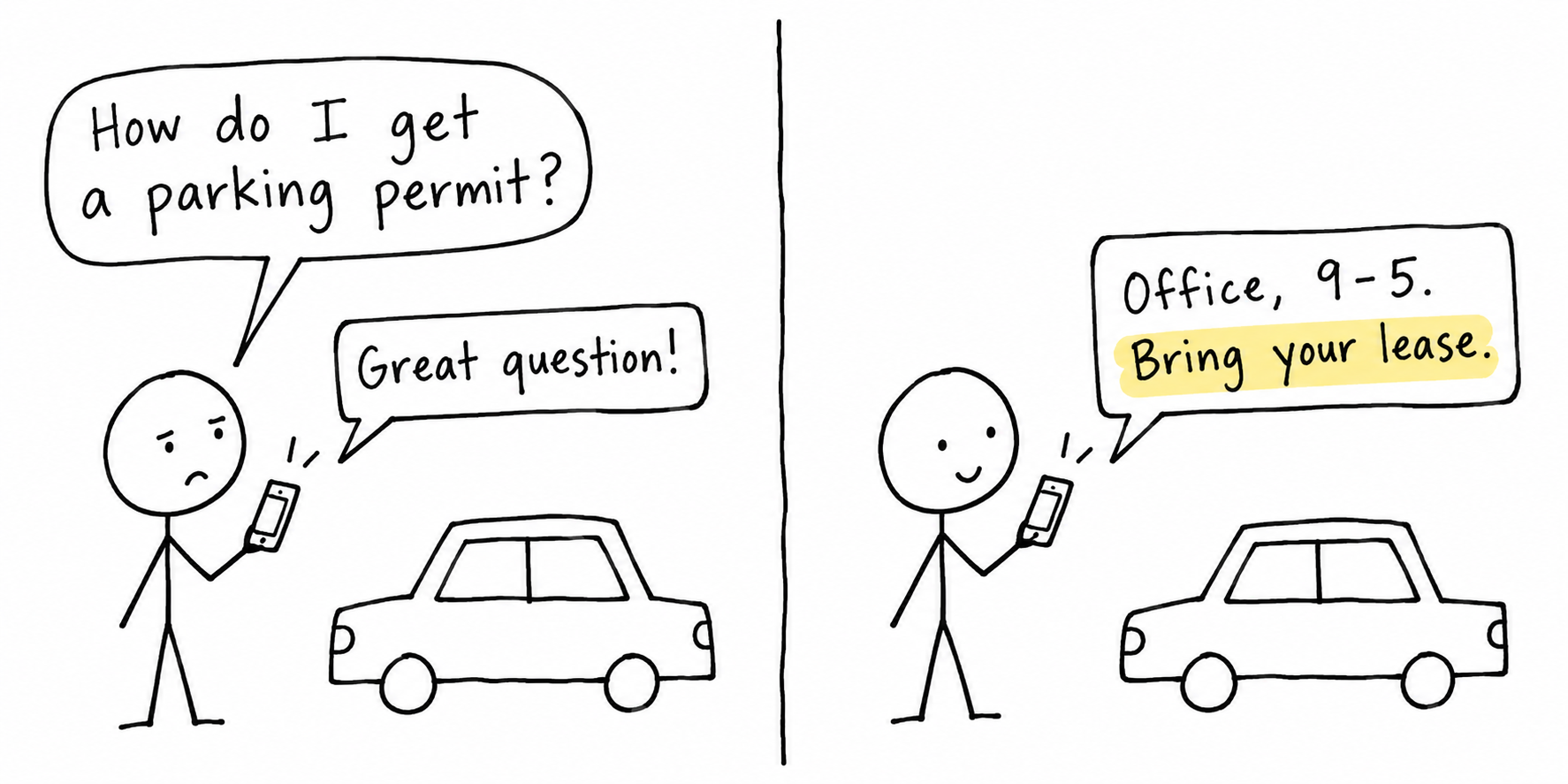
Still, it raises a worthwhile operational question: what happens to a routine question when your office is closed?
A renter asking how to get a replacement parking permit probably wants the steps, the cost, and the timing. An instant message saying someone will respond later leaves all three unanswered.
For an AI pilot, I’d review a small sample of conversations each week. Did the answer match the property’s actual policy? Did the resident have to repeat the question? When a person was needed, did the handoff work?
Those checks are more useful than celebrating how many messages a system sent. Speed matters most when something useful arrives quickly.
Start with the task residents keep chasing
At your next team meeting, bring five recent resident conversations. Look for the ones that took three exchanges to resolve something simple.
Pick one recurring problem. Rewrite the instructions, remove an unnecessary step, or give someone clear responsibility for the follow-up. Then check whether residents still have to chase it.
You may eventually need new software or a new service provider. First, find the unfinished task that keeps landing back in the renter’s lap. That’s a concrete place to begin.
Survey figures: AppFolio, 2026 Renter Preferences Report. Examples, interpretations, and suggested experiments are the author’s analysis.